
Hutu and Tutsi are two groups in Africa that became known to most in other parts of the world through the grisly 1994 Rwanda genocide, but the history of conflict between the two ethnic groups reaches back further than that. In 1994, one of the worst incidents of genocide in modern history took place in Rwanda, where Hutu extremists slaughtered nearly a million Tutsi and moderate Hutu. The Hutu and Tutsi cultures have been largely integrated. The Tutsi adopted the mutually intelligible Bantu languages of Rwanda and Rundi, which were originally spoken by the Hutu.
After nearly 20 years, deep-rooted trauma from the Rwandan genocide still haunts many.
Through our reconciliation work in Rwanda, we bring together victims and perpetrators of the genocide by providing microfinance, trauma counselling and dialogue clubs.
This programme helps the communities to move forward and rebuild their lives together, avoiding the risk of renewed conflict.
The story of Monica, a Hutu survivor
Monica is 50 and has two young children.
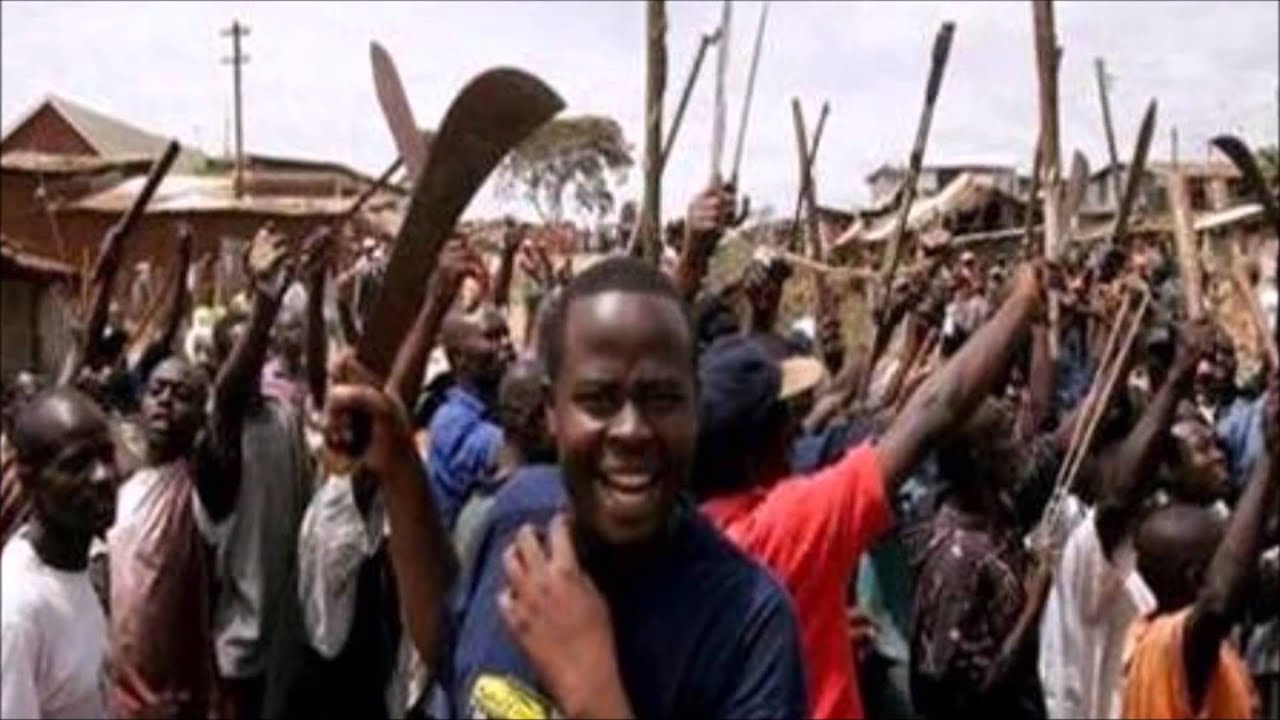
“I am a Hutu woman who was married to a Tutsi man. During the genocide my family was attacked by my brothers and father – they forced me to witness their slaughtering my six children and husband with pangas and traditional weapons to create the maximum pain. I can still hear their screams of pain and terror. My father was screaming at me that it was my fault the family was murdered because I married a ‘snake’, the local expression describing a Tutsi. I ran away to Tanzania where I lived in a refugee camp. My father was also there but we never spoke.
All my brothers were in jail for the horrendous crimes they committed.
The cause of the genocide was blind hatred, how else could a family murder their family? Even now, I do not understand hatred.
History Of The Hutu And Tutsimac's History Timeline
The project dialogue club leader came to my house many times to convince me to join. I was living in a dilapidated house along the river in total isolation because I was betrayed by my family and rejected by my husband’s family. Can you imagine my loneliness? After the trauma training I had the courage to call my brothers who were out of jail – initially it was unbearable to see them because the memories flooded back with enormous grief.
I forced myself to go to the club, and with further counselling, I now understand why they committed murder and have forgiven them. The club members, Hutu and Tutsi built me a new home.
History Of The Hutu And Tutsimac's History Encyclopedia
My brothers were a part of the team. Without the club I would not be with my family. I am happy now.”
For the 25th anniversary of the Rwandan genocide against the Tutsi we went back and visited Monica to find out how she was doing, five years on.

Read other inspiring stories of Rwandan people rebuilding their lives after the genocide:
Photo: Carol Allen Storey for International Alert
The Rwandan genocide of 1994 wasn’t an isolated event. It was the most horrific in a string of mass murders perpetrated by the Hutu against the Tutsi, and vice versa, since 1962, when Belgium granted independence to Rwanda and Burundi, two neighboring nations in Africa’s Great Lakes region.Who’s a Hutu, Who’s a Tutsi?
Together, Hutus and Tutsis account for nearly all the people of Rwanda and Burundi. Roughly 90 percent of Rwandans are Hutu, while 9 percent are Tutsi. About 85 percent of Burundians are Hutu, and 14 percent are Tutsi. (The rest are mainly Twa, an indigenous pygmy people.)
Contact between the two groups dates back to the Tutsis’ arrival in Hutu territory six centuries ago. But, until the 20th century, they apparently got along well – so well, in fact, that experts now disagree, sometimes vehemently, about the nature of the differences between them.
Nature, or Nurture?
Some say there are racial differences. Tutsis are supposedly taller, thinner, and lighter-skinned, while Hutus are supposedly shorter, thicker, and darker-skinned. Yet others say these biometric measures are groundless, if not racist garbage. They point out that years of intermarriage have long since blurred racial boundaries – if they existed at all.
The Hutu and the Tutsi aren’t much different ethnically, either. They speak the same languages (which used to be the Hutus’), follow essentially the same clan and kinship systems (borrowed from Tutsi traditions), and practice the same religions. Many in both groups are now Roman Catholic.
History Of The Hutu And Tutsimac's History On This Day
Ancient History, or Recent?
Hutu language and customs were well established in the Great Lakes region when the cattle-herding Tutsi started arriving around 1400. But the Tutsi brought more than livestock. They also brought a more sophisticated understanding of war, which eventually helped them dominate despite smaller numbers.
The Tutsi social and political system centered on a quasi-divine king (the “mwami”), who was surrounded by chiefs and sub-chiefs, each in charge of a single hill. Scholars have compared it to a feudal or caste system, with Hutus at the bottom and Tutsis at the top of the socioeconomic heap. Unlike some such systems, however, there seems to have been a fair amount of movement up and down the heap – at least until westerners arrived at the turn of the 20th century.
The westerners – mainly Belgians – used race not only for classification, but also for colonial administration. They issued ethnic identity cards and discriminated in favor of the minority Tutsi, who they perceived as closer to white. They then repeatedly played the race card to divide and rule Rwanda and Burundi. Whatever animosity existed between the Hutu and Tutsi before, the Belgians made it much worse.
Scylla, or Charybdis?
History Of The Hutu And Tutsimac's History War
By the time Rwanda and Burundi officially came into being in 1962, Hutu-Tutsi antagonism was causing trouble for both nations. A Rwandan Hutu revolt ousted the Tutsi king, who fled the country with some 200,000 other Tutsis. Many ended up in Burundi where, fearing a similar fate, the Tutsi powers-that-be cracked down hard on the local Hutu.
In 1963, a group of exiled Rwandan Tutsis returned home as a rebel army, attempting to overthrow the Hutu government. They failed, but the effort prompted a large-scale massacre of Tutsis by Hutus, followed by smaller-scale reprisals. Then, in 1972, a Hutu uprising in Burundi resulted in widespread massacres by Tutsi-led forces, who killed at least 100,000 people, most of them Hutu.
Worse Comes to Worst
Horrific as they were, these massacres pale in comparison to the genocide in Rwanda in 1994. Hutu extremists carefully planned, then led, the murder of some 800,000 fellow Rwandans, mostly Tutsi. Hutus who refused to go along were murdered, too. A Hutu-controlled radio station repeatedly urged the nationwide slaughter on, shouting “The graves are not yet full!”
Tutsi-led military forces eventually turned the tables, ousting the Hutu-dominated government and chasing the extremists (along with thousands of other Hutus) out of Rwanda. Across the border in the Democratic Republic of the Congo, the fighting continued, helping to precipitate a complex regional war that has claimed 3 million lives.
Officially, the Rwandan government now refuses to distinguish between Hutu and Tutsi. In this case, forcing everyone to toe the party line just might be a good idea.
- The President and the Political System
- Day of Decision: The Battle of Yorktown
- Merciless Murder: A True St. Valentine’s Day Tale
- Battle of Shiloh
- Election of 1944: Referendum on World War II
- Against the Death Penalty